Anúncios
Millions worldwide are discovering the power of digital measuring tape apps, turning smartphones into precision tools that fit in any pocket.
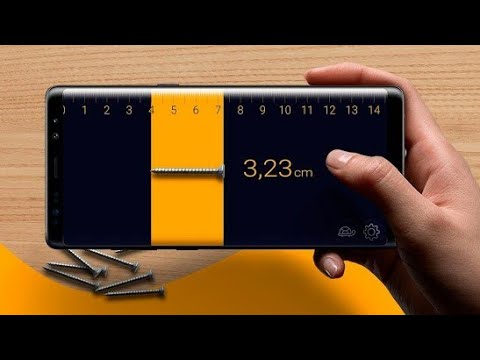


The smartphone revolution brought calculators, cameras, and GPS into our pockets. Now, augmented reality (AR) technology enables your phone to measure real-world objects with surprising accuracy. Whether you’re furnishing a new apartment, planning a DIY project, or working professionally in construction, these digital measuring solutions eliminate the need to carry physical tape measures everywhere.
Anúncios
Recent studies show that over 50 million users globally have adopted mobile measuring apps, with downloads growing 140% year-over-year. This shift represents more than convenience—it reflects how smartphone capabilities now rival traditional tools while offering features physical tape measures simply cannot provide, like instant calculations, cloud storage, and photo documentation.
📱 How Digital Measuring Apps Actually Work
Digital tape measure apps leverage your phone’s camera combined with advanced AR frameworks—ARCore for Android and ARKit for iOS. These systems create a spatial map of your environment by analyzing movement patterns and visual markers detected through the camera lens.
Anúncios
When you point your camera at a surface, the app places virtual anchor points in three-dimensional space. By marking a start point and endpoint, the software calculates the distance between these anchors using spatial geometry algorithms. Most modern smartphones contain sophisticated sensors—accelerometers, gyroscopes, and depth sensors—that work together to achieve measurement accuracy within 1-2% margin of error.
The measurement process breaks down into four steps:
- Surface detection: The camera scans for horizontal or vertical planes like floors, walls, or tabletops
- Anchor placement: You tap the screen to set measurement starting points
- Distance calculation: The app computes real-world distances using sensor data and visual processing
- Result display: Measurements appear on-screen in your preferred units (inches, feet, centimeters, meters)
Premium apps enhance basic AR measuring with AI-driven edge detection, automatically identifying object boundaries and corners. This feature proves invaluable when measuring furniture dimensions or room layouts, reducing manual guesswork and improving precision.

🏆 Top Features Transforming How People Measure
Modern measuring apps evolved far beyond simple point-to-point distance calculations. The best platforms now offer comprehensive toolsets that replace entire toolboxes.
Automatic Object Recognition
Smart apps detect common rectangular objects—doors, windows, picture frames, boxes—and automatically calculate dimensions without manual anchor placement. This feature saves significant time during home assessments or furniture shopping.
Room Scanning and Floor Plans
Walk around a room with your camera active, and advanced apps generate accurate floor plans complete with measurements. These digital blueprints export to PDF or CAD formats, perfect for contractors, real estate agents, or homeowners planning renovations.
Volume and Area Calculations
Beyond linear measurements, leading apps compute square footage for flooring projects and cubic volume for moving estimates. Measure a room’s length and width, and the app instantly calculates how many square feet of carpet you’ll need—including a waste factor for cuts and mistakes.
Photo Documentation
Every measurement saves with a timestamped photo showing exactly what you measured. This feature proves essential for professional contractors providing client estimates or homeowners documenting insurance claims.
Cloud Sync and Project Organization
Store unlimited measurements in organized project folders that sync across devices. Tag measurements, add notes, and share complete project files with colleagues or clients through email or cloud links.
💼 Real-World Applications Saving Time and Money
The practicality of mobile measuring tools extends across professional industries and everyday scenarios.
Interior Design and Furniture Shopping
Before purchasing that sofa online, measure your living room’s available space with centimeter precision. Check whether the dining table fits your breakfast nook or if the bookshelf clears the ceiling. Online furniture returns cost retailers $550 billion annually—measurement apps help shoppers avoid costly mistakes.
Home Improvement and DIY Projects
Calculate exactly how much paint, wallpaper, or tile you need by measuring wall surfaces accurately. Determine lumber lengths for deck construction or fencing projects. One user reported saving $340 on a bathroom renovation by precisely measuring tile requirements instead of over-ordering based on rough estimates.
Real Estate and Property Management
Real estate professionals generate accurate listing measurements in minutes rather than hours. Property managers document unit conditions with measured photos for lease agreements. Appraisers verify square footage claims without scheduling additional site visits.
Construction and Contracting
Field technicians measure job sites for preliminary estimates without carrying bulky equipment. HVAC specialists determine ductwork requirements. Electricians calculate cable runs. Flooring contractors quote projects on-site with immediate accuracy.
Moving and Logistics
Determine whether your furniture fits through doorways, stairwells, and elevators before moving day. Measure truck bed dimensions to optimize loading efficiency. Calculate total cubic footage for moving company estimates—potentially saving hundreds on oversized truck rentals.
🎯 Accuracy Compared to Traditional Tape Measures
The obvious question: can a smartphone app truly match physical measuring tools used by professionals for centuries?
Independent testing reveals that modern AR measuring apps achieve 95-98% accuracy for distances under 10 feet when used properly. For reference, a typical 25-foot tape measure shows accuracy within ±1/16 inch—roughly 0.2% deviation. Quality measuring apps deliver approximately 1-2% variance, translating to less than a quarter-inch difference on a 10-foot measurement.
Factors affecting measurement accuracy:
| Factor | Impact on Accuracy | Optimal Conditions |
|---|---|---|
| Lighting conditions | High impact | Bright, even lighting without harsh shadows |
| Surface texture | Medium impact | Textured surfaces with visible details work better than blank walls |
| Distance range | High impact | Best accuracy within 2-15 feet; drops beyond 20 feet |
| Phone model/year | Medium impact | Devices from 2019+ with dedicated depth sensors perform best |
| Hand stability | Medium impact | Steady hands or resting phone on stable surface |
For most household tasks—furniture placement, picture hanging, room planning—this accuracy level exceeds requirements. Professional applications demanding sub-millimeter precision (cabinetry, engineering) still require specialized equipment. However, for preliminary measurements, estimates, and general contractor work, smartphone apps deliver entirely acceptable results.
⚡ Speed and Convenience Advantages
Raw accuracy tells only part of the story. The real breakthrough lies in speed and accessibility.
Consider measuring an L-shaped living room with a traditional tape measure. You need a partner to hold one end, record each measurement on paper, calculate total square footage manually, then transcribe everything into a digital format for sharing. This process takes 15-20 minutes minimum.
With a measuring app, the same task requires 3-4 minutes. Walk the room perimeter, tap anchor points at each corner, and the app instantly calculates dimensions, square footage, and generates a shareable floor plan. The measurement data automatically saves with GPS coordinates and timestamps.
Time savings documented by users:
- Room measurements: 75% faster than traditional methods
- Multiple room property assessment: 82% time reduction
- Furniture dimension checks while shopping: Instant vs. return trip home for physical tape
- Height measurements (trees, buildings, ceilings): 90% faster using phone vs. ladder and tape
The accessibility factor matters equally. Your phone stays in your pocket constantly—the tape measure lives in your garage toolbox. Spontaneous measurement needs (checking if a dresser fits while thrift shopping, verifying luggage dimensions at the airport, measuring a parking space) become instantly solvable instead of mental estimates followed by purchase regrets.

💡 Smart Tips for Maximum Measurement Accuracy
Understanding how to optimize app performance separates mediocre results from professional-grade measurements.
Calibration Matters
Most apps include calibration routines where you measure a known distance (like a standard sheet of paper at 11 inches) to fine-tune the algorithm. Run calibration in lighting conditions similar to your actual measurement environment for best results.
Surface Detection Technique
Before measuring, wave your phone slowly across the target surface for 3-5 seconds. This scanning motion helps the AR system build an accurate spatial map. Watch for visual indicators—most apps display a grid or dots when surface detection succeeds.
Anchor Point Precision
Zoom in before placing measurement points at object edges or corners. The difference between tapping a point 2mm off versus precisely on target compounds across multiple measurements.
Lighting Optimization
Avoid measuring in dim conditions or harsh direct sunlight creating strong shadows. Overcast daylight or evenly distributed indoor lighting produces optimal results. If measuring outdoors, early morning or late afternoon works better than midday.
Multiple Measurement Verification
Take three measurements of the same distance and compare results. If all three match within 1-2%, you’ve achieved reliable accuracy. Significant variance signals poor surface detection or lighting issues—reposition and retry.
Know Your Limits
AR measuring works beautifully for everyday household and light commercial applications. For critical measurements where errors create expensive consequences—custom cabinetry, window replacement, structural work—verify app measurements with traditional tools or hire professionals with laser measuring equipment.
🌟 Accessibility Features Opening New Possibilities
Digital measuring tools democratize capabilities previously requiring physical ability and specialized knowledge.
Users with mobility limitations who struggle handling physical tape measures can measure spaces independently using phone-based tools. Voice command integration in premium apps allows hands-free operation—helpful when working on ladders or in awkward positions.
Vision-impaired users benefit from audio readout features announcing measurements aloud. The phone’s camera sees what the user cannot, while text-to-speech technology communicates dimensions verbally.
Language barriers disappear through automatic unit conversion and multilingual interfaces. A contractor working with international clients switches between metric and imperial measurements with a single tap.
Educational applications help students visualize geometry and spatial reasoning concepts. Instead of abstract textbook diagrams, learners measure real objects and spaces, connecting mathematical principles to physical reality.
🔐 Privacy and Data Security Considerations
Measuring apps require camera access and often location permissions, raising legitimate privacy questions.
Reputable applications process AR calculations locally on your device—your camera feed doesn’t upload to remote servers. Measurement data saves to your device or personal cloud storage rather than company databases. However, always review app permissions carefully.
Privacy best practices:
- Choose apps with clear privacy policies stating data isn’t sold to third parties
- Deny location permissions if the app doesn’t require GPS coordinates for your use case
- Avoid apps requesting unnecessary permissions (contacts, microphone, etc.)
- Review and delete measurement history periodically if it contains sensitive property information
- For professional use involving client properties, ensure apps comply with relevant data protection regulations
Most established measuring apps operate with privacy-respecting business models—freemium versions monetize through premium feature upgrades rather than data harvesting.
📊 Cost Comparison with Traditional Measuring Tools
Traditional measuring equipment costs vary widely based on quality and features.
| Tool Type | Typical Cost | Limitations |
|---|---|---|
| Basic 25-foot tape measure | $8-$15 | Manual recording; no automatic calculations; requires two people for long distances |
| Laser distance measurer | $40-$200 | Single-dimension only; separate device to carry; limited data storage |
| Professional laser measurer with Bluetooth | $150-$400 | Additional device; learning curve; battery maintenance |
| Premium measuring app (annual subscription) | $0-$50/year | Requires compatible smartphone; slightly lower precision than laser tools |
Many measuring apps offer completely free versions with core functionality—unlimited basic measurements without feature restrictions. Premium tiers ($20-50 annually) add floor plan generation, cloud storage, and advanced tools.
For homeowners needing occasional measurements, free apps eliminate equipment costs entirely. Professionals already carrying tablets or phones for other business functions simply add measurement capability without purchasing separate hardware.
🚀 Future Technology Advancing Mobile Measurement
Current AR measuring represents first-generation technology. Upcoming innovations promise dramatic improvements.
LiDAR sensors—already standard in recent iPhone Pro models—enable millimeter-accurate depth mapping. This technology captures millions of depth points per second, creating precise 3D models of environments. Android manufacturers are rapidly integrating similar depth-sensing hardware.
AI-powered measurement will automatically identify objects and suggest relevant measurements. Point your camera at a window, and the app instantly measures height, width, and calculates glass area without manual input. Machine learning algorithms will recognize thousands of common objects and apply appropriate measurement protocols.
Integration with smart home systems and IoT devices will create persistent spatial maps. Measure your home once, and furniture shopping apps will automatically verify whether products fit your specific rooms using stored dimensions.
Collaborative measurement will allow multiple users to simultaneously measure different aspects of large spaces, with data aggregating into unified project files in real-time.
The measurement accuracy gap between smartphone apps and professional laser tools continues shrinking. Within 2-3 years, experts predict consumer devices will achieve sub-millimeter precision for distances up to 30 feet—surpassing many current professional tools.
✨ Making the Switch to Digital Measuring
Transitioning from traditional measuring tools to smartphone apps requires minimal learning investment with immediate returns.
Start by measuring familiar objects with known dimensions—doorways, standard furniture pieces, room dimensions you’ve previously measured. This practice builds confidence in the technology and helps you understand optimal techniques.
Keep a traditional tape measure handy during the first week for verification. You’ll quickly discover that smartphone measurements match physical tools for the vast majority of applications.
Explore feature sets beyond basic distance measurement. The photo documentation, area calculations, and project organization tools often deliver unexpected value once you understand their capabilities.
For professional adoption, run parallel workflows initially. Measure jobs using both traditional methods and apps, comparing results and workflow efficiency. Most contractors report confidence to switch completely within 2-3 projects.
The millions already benefiting from mobile measuring technology aren’t early adopters experimenting with unproven gadgets—they’re practical users who discovered these tools deliver genuine value. Whether you’re hanging shelves, buying furniture, planning renovations, or managing properties professionally, your smartphone contains a capable measuring device that’s ready whenever you need it.
The technology eliminates the common frustration of needing measurements precisely when you don’t have a tape measure available. Your phone stays with you constantly, transforming spontaneous measurement needs from impossible to instant. This accessibility alone justifies trying these apps, even before considering the advanced features that enhance accuracy and productivity.
Digital measuring represents the natural evolution of smartphone utility—another professional tool absorbed into the multipurpose device already central to modern life. The convenience, speed, and expanding capabilities explain why adoption continues accelerating across both consumer and professional markets worldwide.